What a conversation on leadership in divided times reveals about trust, proximity and the responsibility to act.
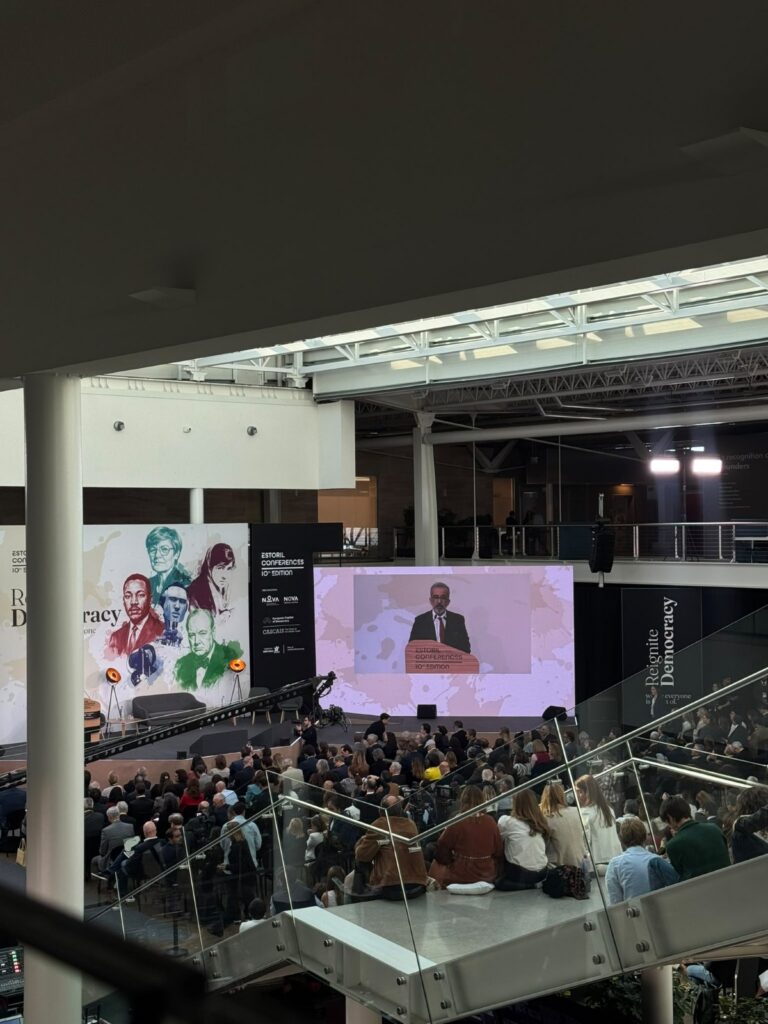
At a time of growing polarisation, the way we lead matters as much as the decisions we make. We were at the Estoril Conferences to hear Jacinda Ardern, Prime Minister of New Zealand between 2017 and 2023, in conversation with Maria João Carioca about leading in divided times.
At Vanilla Project, we believe leadership should be guided by empathy, respect and responsibility. Ardern’s reflections offered a clear perspective on how these values can translate into concrete decisions.
Empathy that leads to action
Ardern revisited the 2019 Christchurch attack and the response that shaped her government’s approach: there would be no “us” and “them”. Mourning alone, however, was not enough. In her words, “Empathy is nothing without action.”
This distinction matters. Empathy can easily become performative when it remains a matter of words. Its value lies in the decisions it informs and in the willingness to act on what we learn from other people’s experiences.
Trust without certainty
Leaders are often expected to have an answer for everything. Ardern argued that trust does not depend on absolute knowledge, but on the honesty to acknowledge uncertainty and the commitment to have a plan.
Transparency plays a central role here. When people understand what is known, what remains uncertain and what will happen next, trust becomes possible even in difficult circumstances.
Staying close to people
Ardern identified curiosity, proximity and trust as the conditions for empathetic leadership. Understanding what people truly need requires being close enough to their reality.
This reflection is particularly relevant in Portugal, where many people feel their voices are not being heard. Reducing the distance between decision-makers and those affected by their decisions is essential to rebuilding confidence in public life.
Uniting around shared values
Ardern also addressed the growing tendency for politics to deepen divisions. If people form groups so easily, she asked, why not bring them together around shared human values such as non-violence and the rejection of hate?
Her suggestion that the challenge may lie less in democracy itself than in leadership invites a broader reflection on the responsibility of those in positions of influence.
Returning to what matters
Rebuilding trust and hope depends on institutions, from governments to companies and universities, and on progress in essential areas such as health, education and housing. Ardern also highlighted mental health, recognising its impact on both individual wellbeing and productivity.
Leadership that cannot wait
Ardern closed with a message to the students in the audience, one that extends to all of us: “We don’t need your leadership in the future, we need it now. Please don’t wait.”
“Empathy, respect and responsibility are not abstract ideals. They are choices we make every day, in how we listen, how we decide and how we bring people together.”
As Silvia Pazos Rodríguez, Founder & CEO of Vanilla Project, reflects, leadership begins in the way we choose to act.
Leadership is not defined only by the positions people hold, but by how they choose to act. Ardern’s reflections remind us that empathy, courage and responsibility can, and must, translate into decisions that strengthen trust and bring people together.